The Pool Is Half the Project
Most people budget for a pool and then discover the rest.
The deck around it. Where the equipment pad goes and how the noise carries. What happens to the ground you excavated, usually a great deal of Georgia clay that has to go somewhere. The retaining wall the new grade now needs. The safety fence the county requires before it will sign off. Landscaping to
replace what the machinery drove over
Handled separately, that becomes three or four contractors and a yard that stays a construction site for months longer than anyone said. Handled together, it is one schedule.
We build the pool and everything around it: decking and coping, retaining walls, drainage and grading, the safety fence, outdoor kitchen and fire feature if you want them. Same crew, same schedule, one company answerable when something needs sorting.
What We Build
Concrete and gunite pools
Built in place, so the shape is entirely yours rather than something picked from a catalog. Geometric, freeform or anything in between, and the most flexible option on a difficult lot.
Fiberglass pools
A molded shell set into the excavation. Installation is much quicker than concrete, the surface is smooth on feet, and the shapes and sizes come as the manufacturer makes them
Vinyl liner pools
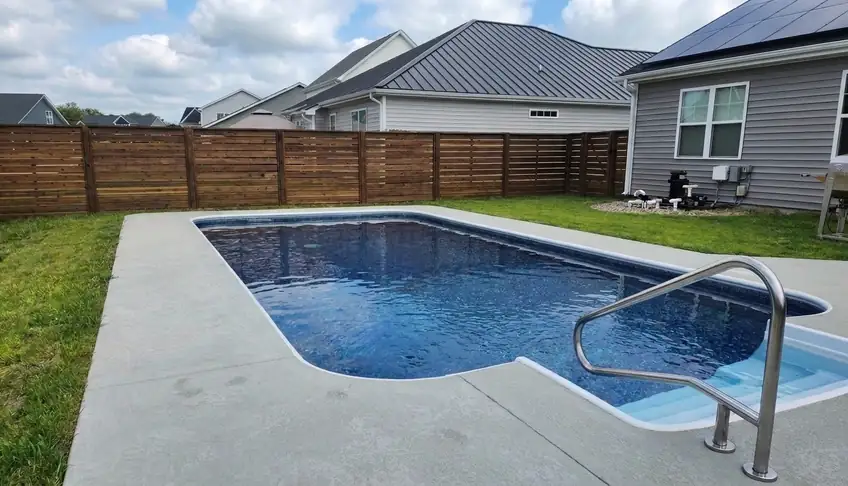
The most affordable way into a full inground pool. Custom shapes are possible, and the liner is replaced periodically rather than resurfaced.
Pools for tight backyards
Plenty of metro Atlanta lots are narrow, sloped, or both. A smaller pool laid out well usually beats a large one squeezed in, and it leaves room to sit beside the water.
Spas and spillovers
A spa attached to the pool and sharing its equipment, or built on its own. Spillover edges, raised walls and the plumbing behind them.
Water and fire features
Waterfalls, sheer descents, bubblers and deck jets. Fire bowls set into the coping rather than placed beside it.
Tanning ledges and steps
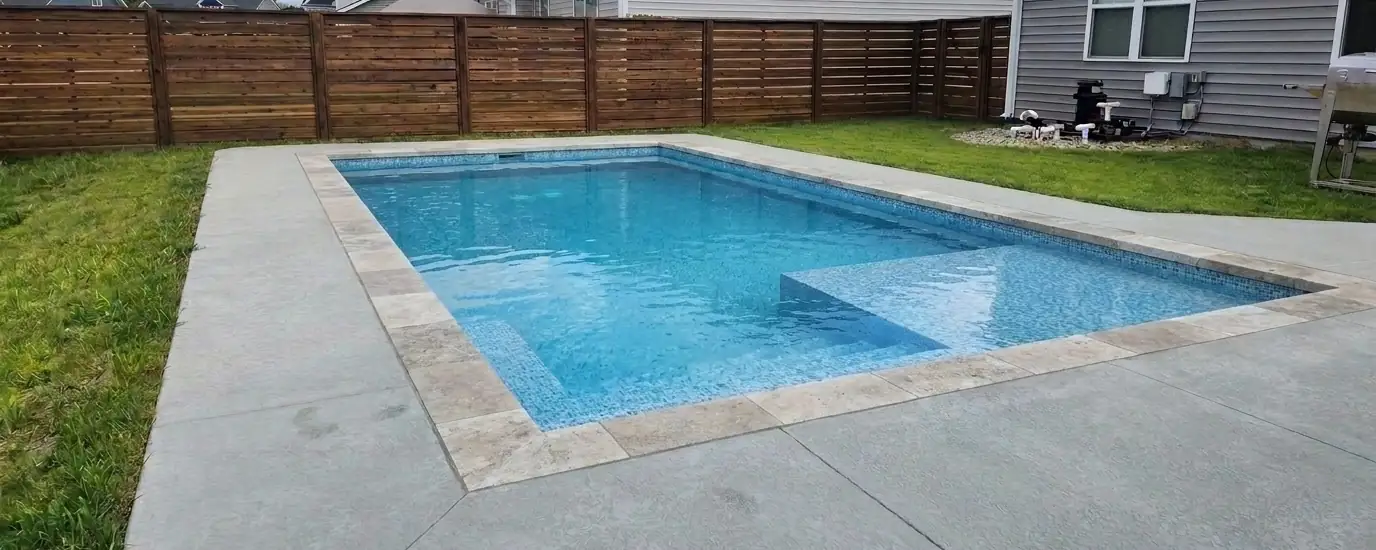
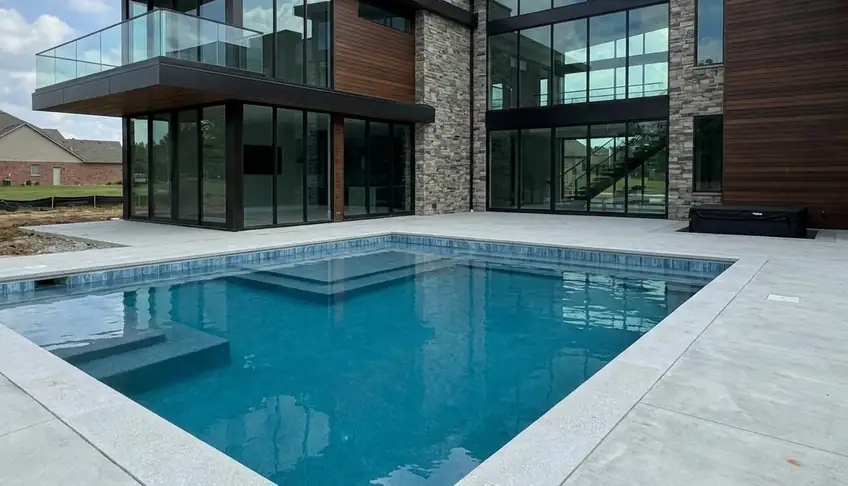
A shallow shelf for loungers, plus swim-outs, benches and sun shelves. Easiest and least expensive to include when they are part of the original layout.
Decking and pool surrounds
Pavers, travertine, natural stone or poured concrete. Lighter stone stays cooler underfoot through the summer, which is worth thinking about on a deck people walk barefoot.
Lighting and automation
LED lighting in the pool and through the surrounding landscape, with pumps, heat, lights and features controlled from your phone.
Where the Pool Actually Goes
Layout gets decided before anything else, and it is worth more than any feature on the list above.
Sun and shade
Much of the metro sits beneath old hardwood canopy. A pool in full shade runs cold and collects leaves for eight months. We look at where the sun actually falls across the day before drawing
anything.
Slope and access
How much excavation, whether machinery can reach the site, and where several
truckloads of clay are going to go. On a tight lot this can be the single biggest cost variable, and it is worth
knowing early rather than at contract.
Distance from the house
Close enough to be used, far enough that pump noise and splashing do not sit under a bedroom window.
The equipment pad
Nobody thinks about it until it is running. It needs access, drainage, screening and somewhere the sound will not bounce off a wall.
Where the water goes
Backwash, deck runoff and the displaced grade all have to drain somewhere legitimate. In red clay that means planning it, not hoping.
Pool Construction, Step by Step
The steps below follow a concrete pool build. Fiberglass and vinyl projects share the early stages but move faster once the shell or liner goes in.
1. Design and layout
Site walk, measurements, then a plan showing the pool, decking, features and how the whole yard works around it. You see it with a price before anything is ordered.
2. Permits and approvals
Every residential pool in metro Atlanta needs a county permit, and most subdivisions will want to see plans before work starts. We can handle both, from the county application through to the HOA submission, so the paperwork is not something you have to chase.
3. Excavation
Digging the shape and hauling off the spoil. The loudest, messiest week, and the one where having your own excavation crew matters.
4. Steel, plumbing and electrical
Rebar cage tied to the shape, plumbing runs, and electrical to the equipment pad. Inspections happen at this stage, before anything is covered.
5. Gunite and cure
The shell is shot and then left to cure. It cannot be rushed, and any contractor who tells you otherwise is telling you something about how they work.
6. Tile, coping and decking
Waterline tile, coping around the edge, then the deck. This is where the pool stops looking like a construction site.
7. Interior finish
Plaster, pebble or quartz, each with a different texture, lifespan and price. We go through it at design rather than at the end.
8. Fill, start-up and handover
Filling, balancing the water, and running the equipment through its first cycle. We walk you through the system so you actually know how to run it.
Safety Fencing Is Not Optional
State rules require a barrier around every residential pool, covering height, the gaps beneath and between sections, and self-closing, self-latching gates. Your county inspects it, and final approval waits until it
passes.
Most pool builders leave this to you, which means finding a fence contractor at the exact moment you want the project finished.
We build the fence as part of the pool. It gets designed into the layout from the start rather than squeezed in afterward, so it works with the deck instead of cutting across it. More on our privacy and pool fencing page.
What a Pool Costs in Atlanta
A pool is a large project, and the yard itself shapes the price nearly as much as the pool does. Two identical pools on different lots can come out well apart.
Pool type and size
Concrete, fiberglass or vinyl liner, plus the depth and shape you settle on.
Getting the hole dug
Excavation volume, how easily machinery reaches the yard, and where the clay goes.
Interior finish
Plaster, pebble or quartz on a concrete pool, or the shell and liner on the others.
Everything around the water
Decking, plus any retaining wall or grading the new elevation needs.
Add-ons
A spa, water and fire features, a tanning ledge, heating, automation or saltwater.
Finishing the site
Safety fencing, landscaping repair and permit fees.
We break it out line by line, so you can see what the spa or extra decking is adding and decide for
yourself.
Our Work
See Our Swimming Pool Projects
Pools and pool decks we’ve built across Metro Atlanta.