The Part You Pay For Is Underneath
Two paver patios can look identical on the day they finish and be completely different products.
One sits on six or eight inches of properly compacted, angular aggregate with the drainage worked out first. The other sits on whatever was already there, screeded flat, laid quickly. Both look great in the photo.One of them is still level in year eight.
We are usually the second company a homeowner calls. The first one already built something that has
settled, tilted toward the house, or grown a low corner that holds water after every storm. Almost none of that is a paver problem. It is a base problem, and by the time it shows, the fix is a rebuild rather than a
repair.
So most of what you are paying us for is the part you will never see again after the first day.
What We Build
Paver patios
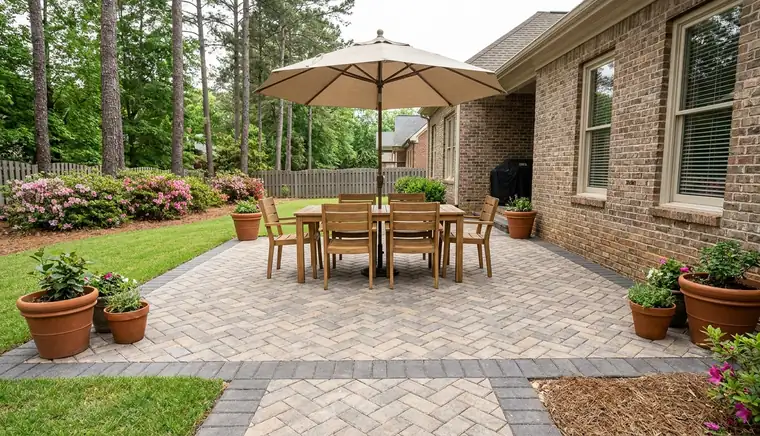
The one most people start with. Sized around furniture that actually fits, sloped away from the house, edged so the perimeter does not creep outward over the years.
Walkways and steps
Front paths, side yard connections, and steps cut into slopes. Riser heights kept consistent, because uneven treads are the thing people trip on and never quite forgive.
Seating walls and columns
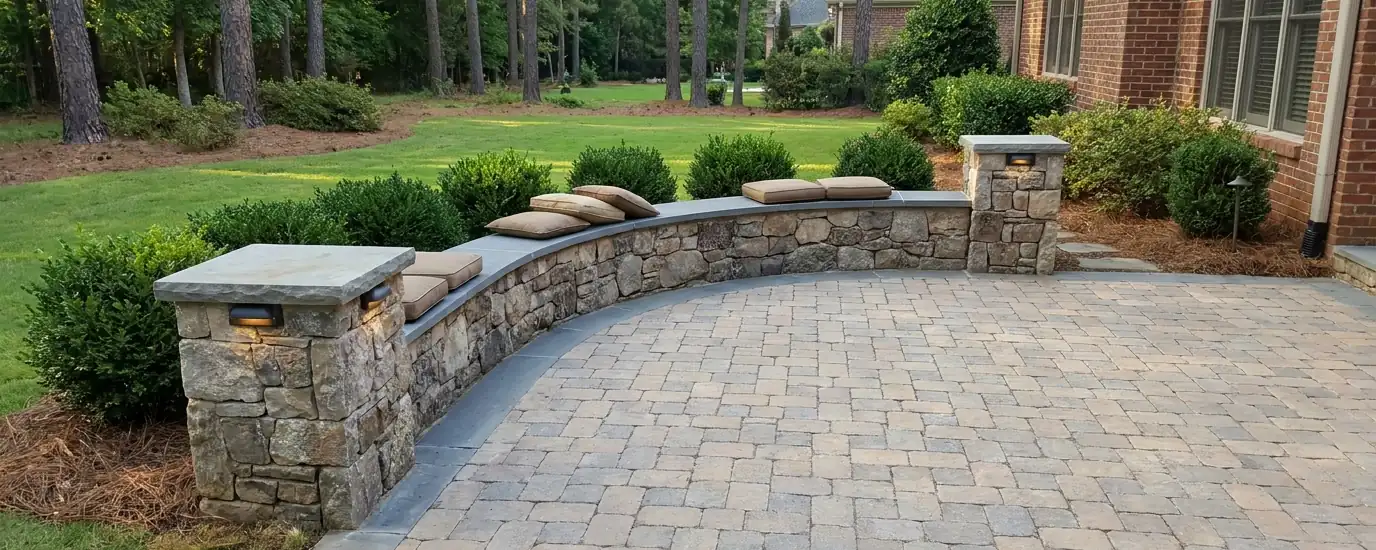
Low walls that double as seating around a patio or fire pit. Cheaper than furniture, and they never blow over in a storm.
Retaining walls
Holding a grade change, built with the drainage and reinforcement the height calls for. More on that on our retaining wall page.
Paver and stone driveways
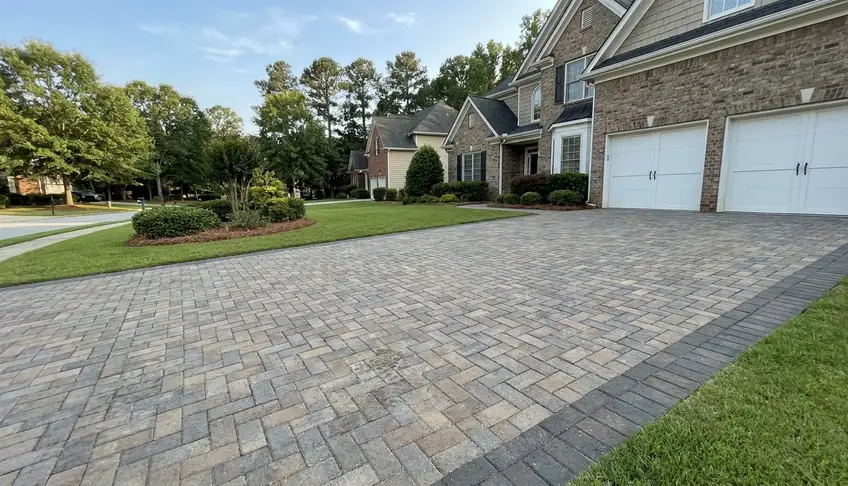
Driveway aprons, full driveways and parking pads, built to take vehicle weight rather than foot traffic. A different base spec entirely, covered on the concrete driveway page.
Fire pits and patio fire features
Built into the hardscape rather than dropped on top of it afterward, so the seating still works around them. Details on the fire pit page.
Choosing Materials
Every material on this list works in Atlanta. They fail differently and they cost differently.
Concrete pavers
The default, and for good reason. Consistent thickness, wide color range, and individual units can be lifted and reset if a section ever moves. Mid-range on price.
Natural flagstone
Irregular, warmer, no two patios alike. Slower to lay, so labor costs more. Slate can get slick when wet and shaded, which is worth knowing before you put it on a north-facing walkway.
Bluestone
Dense blue-gray stone in two finishes. Natural cleft keeps the uneven, split face and suits an older house
or a garden that is meant to look settled in. Thermal is flatter and crisper, the better fit for a modern house.
Both hold heat in full sun, so it does best with some shade.
Travertine and porcelain
Cooler underfoot in an Atlanta August, which matters more than people expect around pools. Higher material cost, very low maintenance.
Poured concrete
Cheapest per square foot for a large area. Cracks eventually, and when it does you cannot lift one piece.You cut and pour a section.
Gravel
Best value by a distance, good for side yards, informal paths and drainage-friendly areas. Needs edging or
it migrates, and needs topping up every few years.
Hardscape Design in Atlanta
Layout is not decoration. Where a patio sits determines whether water runs to the yard or the foundation.How wide a walkway is determines whether two people can use it. Whether the patio elevation matches the door threshold determines whether you step down or trip.
That gets worked out before pricing, sometimes inside a full landscape design and sometimes as a standalone patio layout. You see the plan and the number together.
What Hardscaping Costs in Atlanta
A patio’s price is decided as much by the ground under it as by the stone on top.
Material
From least to most expensive, roughly: gravel, poured concrete, concrete pavers, natural flagstone and bluestone, then travertine and porcelain. Pattern and edge detail add to it.
The ground
How much excavation the site needs, whether drainage has to be corrected first, and how
much base goes in. On a sloped lot this is often the largest part of the job.
Access
A flat yard with a wide gate costs less to work than one where every load of stone goes through a
narrow side yard.
Build quality
Base depth, compaction and edge restraint. These are the parts cheap work skips, and the
parts that decide how long a patio stays level.
We price every project after walking the site, with each part shown separately. The one place we will not cut cost is the base.
Building on Georgia Clay
Most of metro Atlanta sits on red clay. It swells with spring rain, then dries hard and cracks by late August.
Anything built on top rides that movement every year, which is why patios here lift at one corner and hold water at another.
Deep frost is not really our problem. Water is. A base that stays saturated loses its load-bearing ability, and the surface above it settles unevenly. So the aggregate has to drain, the sub-grade has to be shaped to send water somewhere, and the compaction has to be done in layers rather than one pass at the end.
This is unglamorous and it is the entire difference between a patio that lasts and one that gets rebuilt.
Our Work
See Our Hardscaping Projects
Patios, walkways and fire pits we’ve built across Metro Atlanta.