Why Concrete Driveway Contractors in Atlanta, GA Start With the Ground
No slab stays perfect forever, and control joints exist for exactly that reason. But a driveway that cracks badly in its first few years is almost always reacting to what is underneath it.
Much of metro Atlanta is built on red clay, and clay changes size with the weather. It expands after heavy rain and contracts during long dry spells, lifting and lowering whatever rests on it. A downspout draining beside the drive, or a grade that sends runoff under the slab, speeds that up. By the time a crack appears on the surface, the ground below has usually been moving for a while.
New concrete poured over the same ground runs into the same problem.
This is where a landscape construction company has an advantage over a pour-only crew. We handle the grading, excavation and drainage ourselves. Before any forms go down, we find where the water is going and correct it if that is the cause. It adds a little to the upfront cost and keeps you from replacing the
driveway again a few years later.
What We Do
Driveway replacement
We break out the old slab, haul it away, fix whatever caused the failure and pour new. Demolition is handled by our crew, so there is no separate contractor to schedule.
New driveway installation
For new builds and properties that never had a proper drive. Excavation, sub-grade preparation, forming, pouring and finishing.
Widening, extensions and parking pads
Adding width for a second car, extending the apron, or putting in a pad for a boat or trailer. A small addition that can make everyday parking much easier.
Walkways, steps and slabs
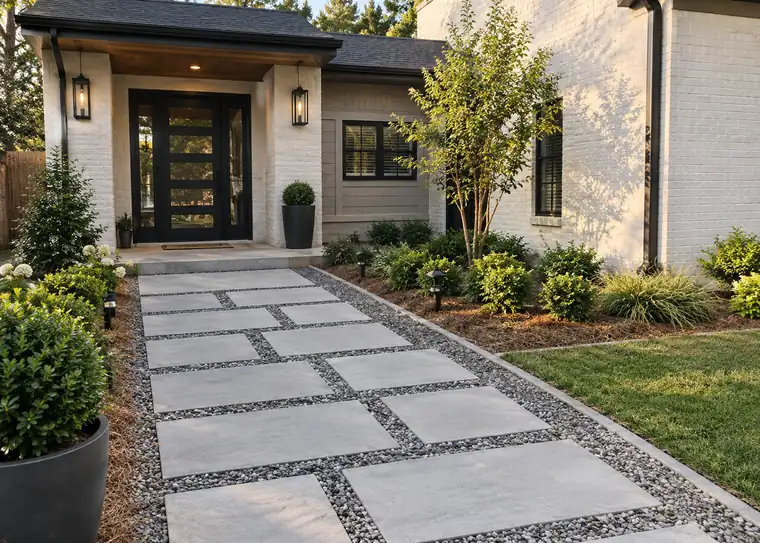
Front walks, side paths, AC and generator pads, and shed slabs. Smaller pours, built to the same standard as a full driveway.
Drainage correction around the drive
Regrading, catch basins and redirecting downspouts. In some cases this fixes the problem on its own and the existing slab can stay.
Crack and panel repair
Not every problem needs a new driveway. Minor cracking or a single sunken panel can often be repaired, and we will tell you when that is the better option.
We Handle the Permit
Worth saying plainly, because plenty of driveway contractors in Atlanta do not.
Some companies will pour your driveway and leave the county paperwork with you, or hand you a phone number and wish you luck. If the work touches the right-of-way, changes the apron, or alters where water drains, that permit is not optional, and an unpermitted change can surface years later when you sell.
We find out what your county requires before quoting, and we prepare and file it. If your project genuinely does not need one, and a straight replacement in the same footprint often does not, you keep the fee in your pocket.
Thickness, Reinforcement and Control Joints
Three things decide whether a driveway lasts, and none are visible once it cures.
Thickness
Set by what the drive has to carry. Two cars need less than a boat trailer, an RV or a work truck parked on it every night. It is decided before the pour and cannot be changed after.
Reinforcement
Wire mesh or rebar, chosen for the span and the load. Its job is to hold the slab together and keep the pieces level with each other, so a hairline crack stays a hairline instead of turning into a step you trip over.
Control joints
Cut at the right spacing and depth, they give the slab a planned place to move. Any cracking follows the joint line in a clean, straight path rather than wandering across the middle of the drive.
The sub-grade
Compacted in lifts before anything is poured. A perfect slab on a poor sub-grade fails anyway, and it fails from below where you cannot see it coming.
What a Concrete Driveway Costs in Atlanta
Two driveways the same size can be priced very differently. The concrete itself is only part of it.
The finish
Plain broom finish is the most economical. Exposed aggregate, color and stamped patterns
each add cost.
Removal
Breaking out the old slab and hauling it away can be a real share of the job.
Sub-grade prep
How much excavation the ground needs, and whether drainage has to be fixed before anything is poured.
Slope and truck access
A steep drive, or one a concrete truck cannot reach, takes more labor and sometimes a pump.
Thickness and reinforcement
Covered above. Heavier loads mean more concrete and more steel.
Permits
Some driveway work needs one, such as widening or changing the apron. A like-for-like replacement usually does not.
Before comparing quotes, ask each contractor what thickness they plan to pour and whether
reinforcement is included. That usually explains any big gap between the numbers.
How Long It Takes, and What Happens to Your Week
The part people actually worry about.
A standard residential driveway replacement is usually a one to three day job on site: a day to break out and haul off, one to prepare and pour, then finishing. Larger or sloped drives take longer, and rain moves the schedule. We would rather wait a day than pour into a storm.
You will not be able to park on it. Foot traffic after a day or two, cars after about a week, heavier vehicles longer. Concrete keeps gaining strength for weeks after it looks finished, so the wait is not us being cautious for the sake of it.
We sweep the street as well as the drive at the end. That sounds like a small thing until you have had a contractor leave concrete washout in the gutter.
Repair or Replace?
Repair usually works for hairline cracks, light surface flaking, or one panel that has dropped slightly on an
otherwise sound drive.
Replacement is the better call with wide cracks across multiple panels, crumbling edges, sections dropped an inch or more, or when the same repair keeps coming back.
That second list almost always means something underneath is moving. Worth diagnosing before
spending anything, because a new slab on the same problem gives you the same result on a longer
timeline.
Our Work
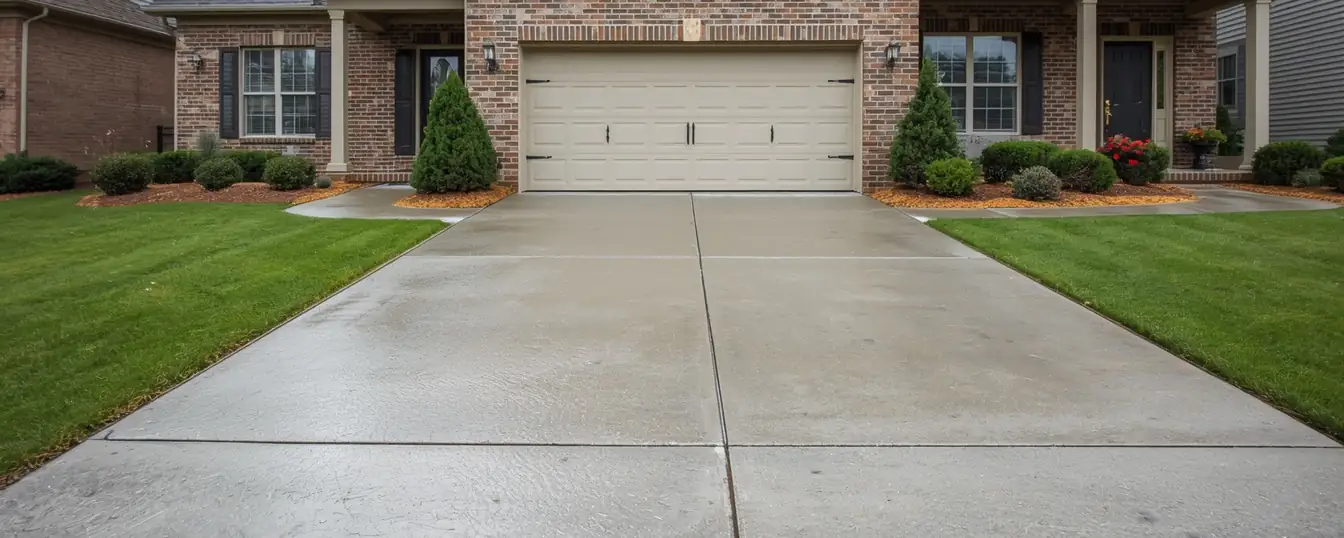
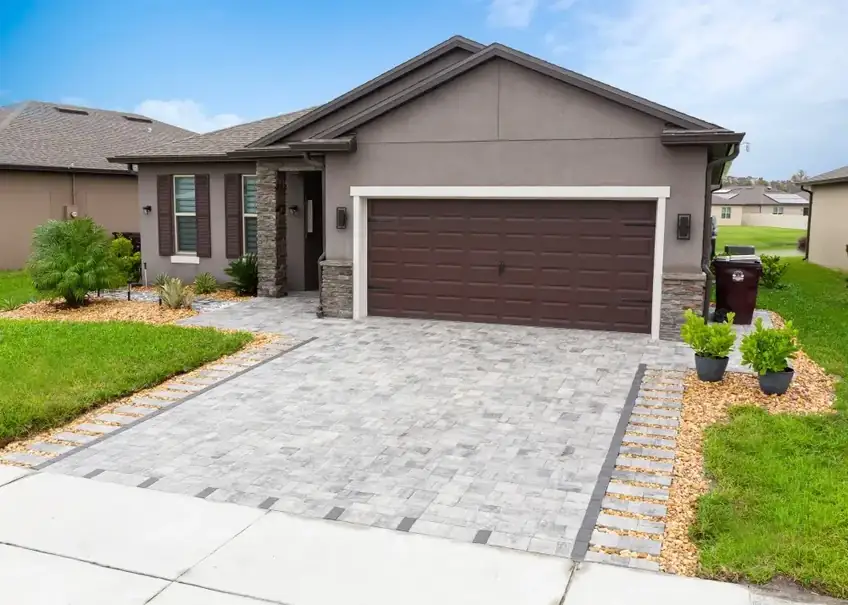
See Our Concrete Driveway Projects
Driveways we’ve poured for homes across Metro Atlanta.
Concrete Driveway Questions