One Crew for the Fence and Everything Around It
Most fence companies do fences. That works fine when the yard is finished and flat.
It works less well when the fence line runs through a slope that needs grading first, or crosses a spot where water pools every storm, or has to go in around a new patio, driveway or pool that has not been built yet. Then you are coordinating two contractors, and the gaps between them become your problem: who fixes the rut the fence truck left, who is responsible when the post line does not match the new retaining
wall.
We build the fence, and we do the grading, drainage, hardscape and driveway work around it. One
schedule, one point of contact, one company answerable for the finished yard.
If all you need is a straight run of fence on flat ground, plenty of good specialists in Atlanta will do that well. If the fence is one part of a larger project, that is where we are worth calling.
What We Install
Wood privacy fences
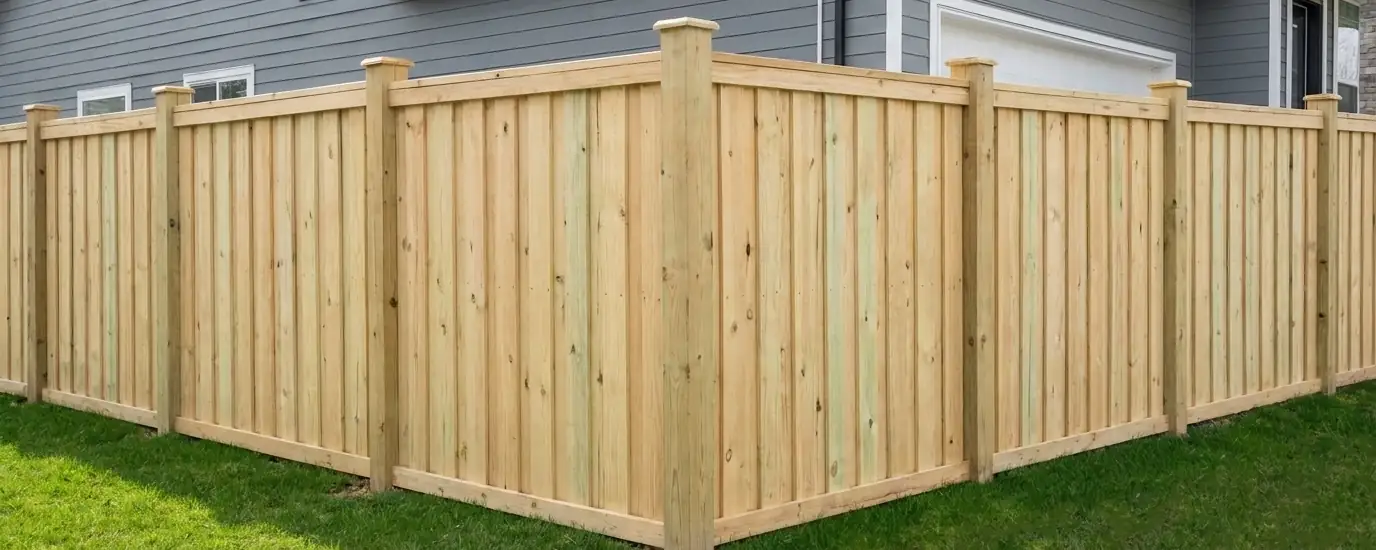
Pressure-treated pine or cedar, six feet standard. Dog-ear, board-on-board, shadowbox or capped. The differences matter more than they sound, and we cover them below.
Vinyl privacy fences
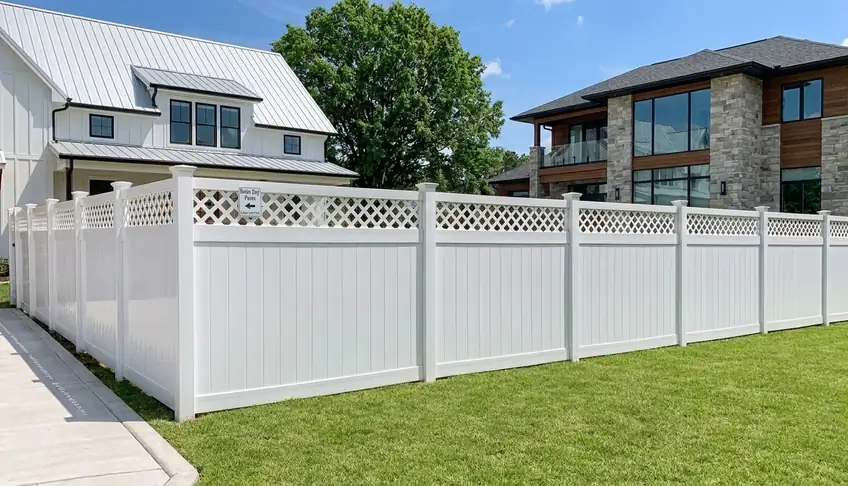
No staining, no sealing, no graying. Higher cost up front and effectively nothing after. Good in full sun
where wood needs the most upkeep.
Metal fencing
Aluminum and steel panels where you want a boundary without blocking the view, and the usual choice around pools when sightlines matter.
Pool safety fences
Georgia requires a barrier around residential pools, with specific height, gap and self-latching gate requirements. If we are building your pool, the fence gets designed into the project rather than bolted on at the end when the inspector asks.
Gates
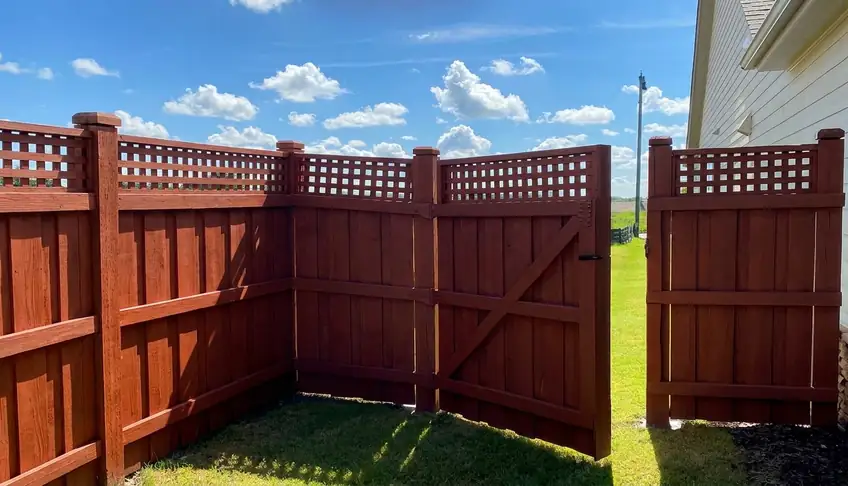
Single, double and wide gates for mower or trailer access. Gates are what fail first on most fences, so framing and hardware matter more here than anywhere else on the run.
Fence removal and replacement
Tearing out the old fence, hauling it off, and dealing with whatever the old posts left behind. Often the majority of the labor on a replacement job.
Repairs
Leaning posts, rotted rails, a section that came down in a storm, a gate that has dropped. Worth a look before assuming the whole run needs replacing.
Wood Fence Styles, and What Each One Actually Does
All of them give you privacy. They differ in what happens after the wood dries.
Dog-ear
The standard and the most affordable. Solid pickets, trimmed corners. Small gaps can open between boards as the pine shrinks in its first year, which is normal, and the reason the other styles exist.
Board-on-board
Pickets overlap, so when the wood shrinks there is still no gap. The most private option, and the most material. Costs more per foot for that reason.
Shadowbox
Pickets alternate front and back. Looks finished from both yards, which matters on a shared property line and keeps neighbors happy. Slight angled sightlines and a little airflow, which helps on windy lots.
Capped and trimmed
A top rail over the pickets, sometimes with a kickboard at the bottom. Cleaner line, protects the picket ends from weather, and it is the difference between a fence that looks builder-standard and one that looks designed.
Horizontal
Modern, usually cedar. Needs closer post spacing and better material, since horizontal boards sag if the run is too long. On a sloped yard it either steps or needs the grade addressed first, which we can do.
Pine or Cedar?
Pressure-treated pine
Treated against rot and termites, widely available in the Southeast, and the budget choice. It will move as it dries, and some warp and twist is normal. Needs about three months before it will take stain properly.
Cedar
Holds off rot and insects untreated, stays straighter over time, takes stain the day it goes up, and weathers to a soft silver-gray if left alone. Costs more and lasts longer.
Vinyl
Not wood, but worth comparing. No maintenance at all, consistent appearance, and it will not rot. Panels can crack under a hard knock, and the finish reads as manufactured rather than natural, which is either the appeal or the drawback depending on taste.
Put simply: pine if the budget is the constraint, cedar if longevity is, vinyl if you never want to think about it
again.
Posts, and Why Fences Fail in Georgia Clay
Almost every failing fence we are called out to has the same root cause: posts that were not set deep enough, or without enough concrete around them.
Clay soil makes that mistake expensive. It takes on water and expands, then dries out and pulls back, and it does this to some degree every year. A shallow post works loose in that movement and starts to lean.Once one post goes, the rails pull out of line, the gate stops latching, and the whole run begins to wave.
We set posts two feet deep in concrete as standard, going deeper for taller panels, corners and anywhere a gate hangs. Gates take more strain than any other point on a fence, so those posts get the most attention.
Slope is the other thing that decides how a fence turns out. On uneven ground it can be built to follow the contour, which looks natural and keeps the line tight to the yard, or stepped in level sections for a more formal look. Stepping leaves gaps underneath unless the ground is brought level first, and since we do
grading as well, that is work we can take on rather than build around.
Height, Permits and Your HOA
Six feet is the usual limit for a backyard fence across most metro Atlanta cities. A few allow eight. Front yard fences are almost always held much lower, often around three or four feet.
Rules change from one city to the next, and your subdivision may be stricter than the city is. Many HOAs also have their own requirements on material, color and which side the finished face has to point.
We pull the permit and submit the HOA paperwork ourselves, so it is not left sitting on your desk while the project waits.
The property line matters just as much. A fence built even slightly onto a neighbor’s land is a legal
headache that tends to surface years later, usually when someone is selling. If there is any question about where the boundary runs, we settle that before anything is dug.
What a Privacy Fence Costs in Atlanta
Fencing is quoted by the linear foot, and the number shifts with the material, the style and what the ground along the line is like.
Material
Pine sits at the bottom of the range, cedar in the middle, with vinyl and metal above both.
Style
A standard dog-ear run is the baseline. Board-on-board uses noticeably more lumber, and capped or trimmed styles add another layer of work.
Height
An eight-foot fence needs more material and longer posts than a six-foot one.
Gates
Each gate adds framing and hardware, and a wide gate for a mower or trailer adds more again.
The fence line
Corners, slope, rock, and any grading needed before the posts go in.
Old fence removal
Taking down and hauling off what is already there.
Every yard runs differently, so we walk the line first and then put the price in writing.
Our Work
See Our Privacy Fence Projects
Wood, vinyl and metal fences we’ve installed across Metro Atlanta.